

The 3.5'' SBC Manufacturer: What Actually Matters When You're Buying
The 3.5-inch single board computer has been around for years, and it's not going anywhere. The size—roughly 146 by 102 millimeters—hits a sweet spot. It's small enough to tuck into a handheld analyzer or a vehicle-mounted terminal, but large enough to hold real connectors, real power circuitry, and a heatsink that does something. When you start looking for a 3.5'' SBC Manufacturer, you'll find dozens of options. Most of them look the same on a spec sheet. They are not the same. Not even close.
The first thing to understand: many companies that call themselves a 3.5'' SBC Manufacturer are actually integrators. They buy a board from someone else, slap their logo on it, and sell it with a datasheet. That's fine if you just need a board for a prototype. It's a disaster if you're building a product that has to survive five years in a factory. A real manufacturer controls the design. They know why a particular voltage regulator was chosen. They can tell you what happens when the input voltage sags to 8 volts for 10 milliseconds. They have the test data to prove it. If you ask about brownout behavior and the answer is a shrug, keep looking.
Thermal design is where the truth comes out. A 3.5'' SBC Manufacturer that understands industrial use will design for conduction cooling. That means thermal vias under the processor, thick copper planes, and often the processor mounted on the underside so it can press against a metal chassis. The board should come with derating curves. Not just "operating temperature -40 to 85°C" but a graph showing maximum sustained power at different ambient temperatures. Without that graph, you're guessing. Guessing leads to throttling. Throttling leads to angry customers.
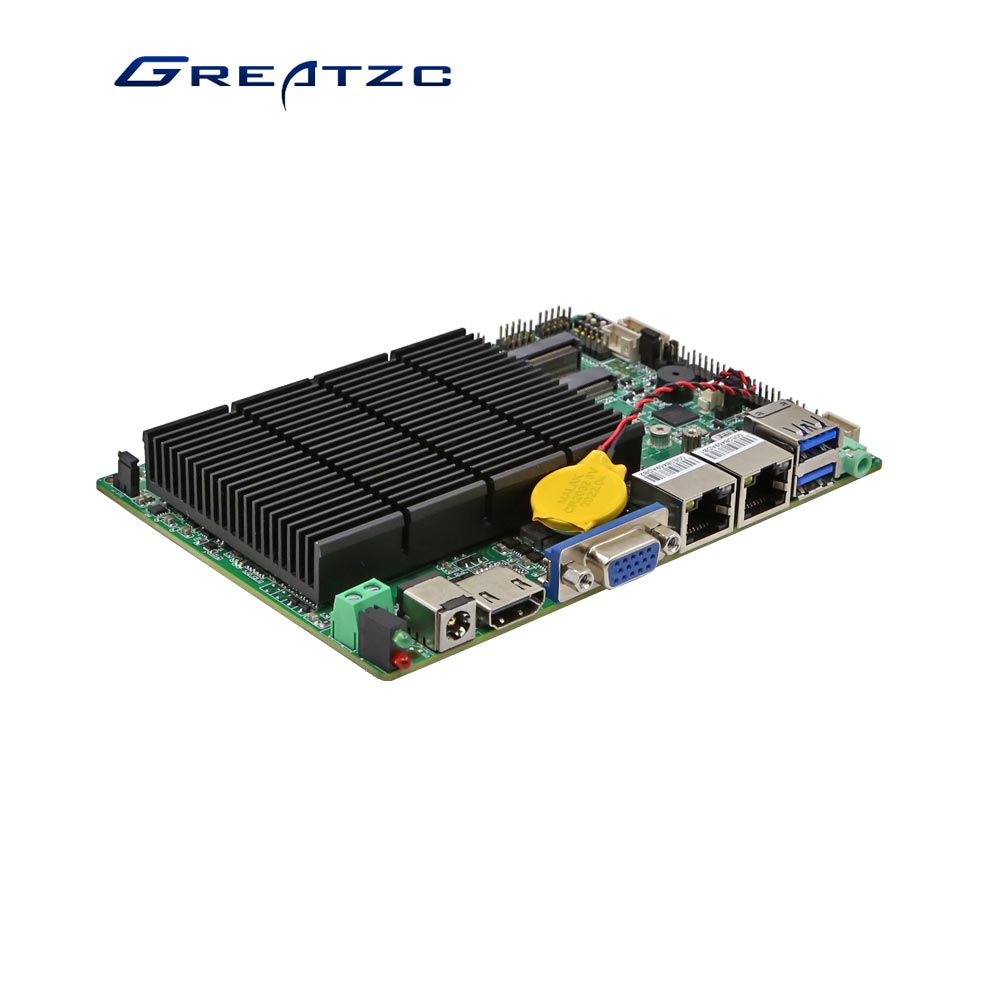
Power input is another filter. Industrial equipment does not have a clean 12-volt rail. Motors start. Relays switch. Lightning strikes nearby. A serious 3.5'' SBC Manufacturer will specify a wide input range, typically 9 to 36 volts, with reverse polarity protection and transient suppression. They will also document brownout recovery. Does the board reboot automatically? Does it latch off? If it latches off, someone has to drive to the site and cycle power. That's an expensive reset.
Connectors matter more than most buyers think. Friction-fit USB jacks are fine on a desk. They are not fine on a vibrating machine. Look for latching headers, locking wire-to-board connectors, and screw terminals where appropriate. Isolated serial ports and isolated CAN bus are worth the extra cost. Isolation prevents ground loops that can fry a processor after a few months of operation. A 3.5'' SBC Manufacturer that skips isolation is cutting corners. They might not tell you. But the field failures will.
Software support is the hidden budget killer. The board support package might boot. It might even recognize your display. But does it support secure boot? Does it have a real-time patch? Can you get kernel updates for seven years? Industrial products often stay in service longer than the manufacturer's interest in maintaining the code. Before you commit, build a minimal image with your actual application. Run it for a week. Check for memory leaks. Test every interface. A 3.5'' SBC Manufacturer that provides a clear long-term support statement is worth more than one that offers a faster processor.
Customization is another differentiator. Maybe you need an extra Ethernet port. Maybe the display connector is on the wrong side of the board. Maybe you need a different pinout for a legacy peripheral. A manufacturer with in-house engineering can modify a standard design without starting from scratch. That saves months. It also means they control the bill of materials. When a component goes on allocation, they know how to find a substitute that actually works.
Certifications are not optional. A credible 3.5'' SBC Manufacturer can show EMC test reports, safety certificates, and environmental test data for shock, vibration, and temperature cycling. The final product still needs its own certification, but starting with a board that already passed radiated emissions and immunity testing saves a lot of pain. Ask for the reports. If they hesitate, assume they don't have them.
Supply chain stability is the elephant in the room. Processors get discontinued. Memory chips change die revisions. Connectors go obsolete. A good 3.5'' SBC Manufacturer publishes a roadmap and issues product change notifications. Some offer pin-compatible variants across processor generations. That gives you an upgrade path without a redesign. Others leave you stranded. Ask how long the board will be available without changes. If the answer is vague, plan for a redesign in two years.
Total cost of ownership is not the same as unit price. A board that costs fifty dollars less but fails in year two is not cheaper. It's more expensive. Documentation quality, technical support, and lifecycle commitment all factor into the real cost. A 3.5'' SBC Manufacturer that treats the board as a long-term platform is the one you want. They exist. They're just not the ones with the flashiest website.
So when you're evaluating a 3.5'' SBC Manufacturer, don't just read the spec sheet. Ask about thermal derating. Ask about brownout behavior. Ask about isolation. Ask about long-term support. Ask for test reports. The answers will tell you more than any benchmark. The industrial embedded market rewards diligence. A board that works in the lab is not the same as a board that works in the field. The difference is the manufacturer behind it. Choose carefully.