

Picking an Embedded SBC for Vision Workloads Without Getting Burned
Edge vision has moved past the toy stage. Inspection cameras on a packaging line, crop-scouting drones, robots that navigate warehouse aisles—these all need local inference, not a round trip to a cloud GPU. That’s where an Embedded SBC earns its keep. But the phrase “Embedded SBC” covers an enormous range of boards. Some handle continuous camera streams without breaking a sweat. Others throttle after three minutes in a sealed box. Choosing wrong means a field recall, not a patch.
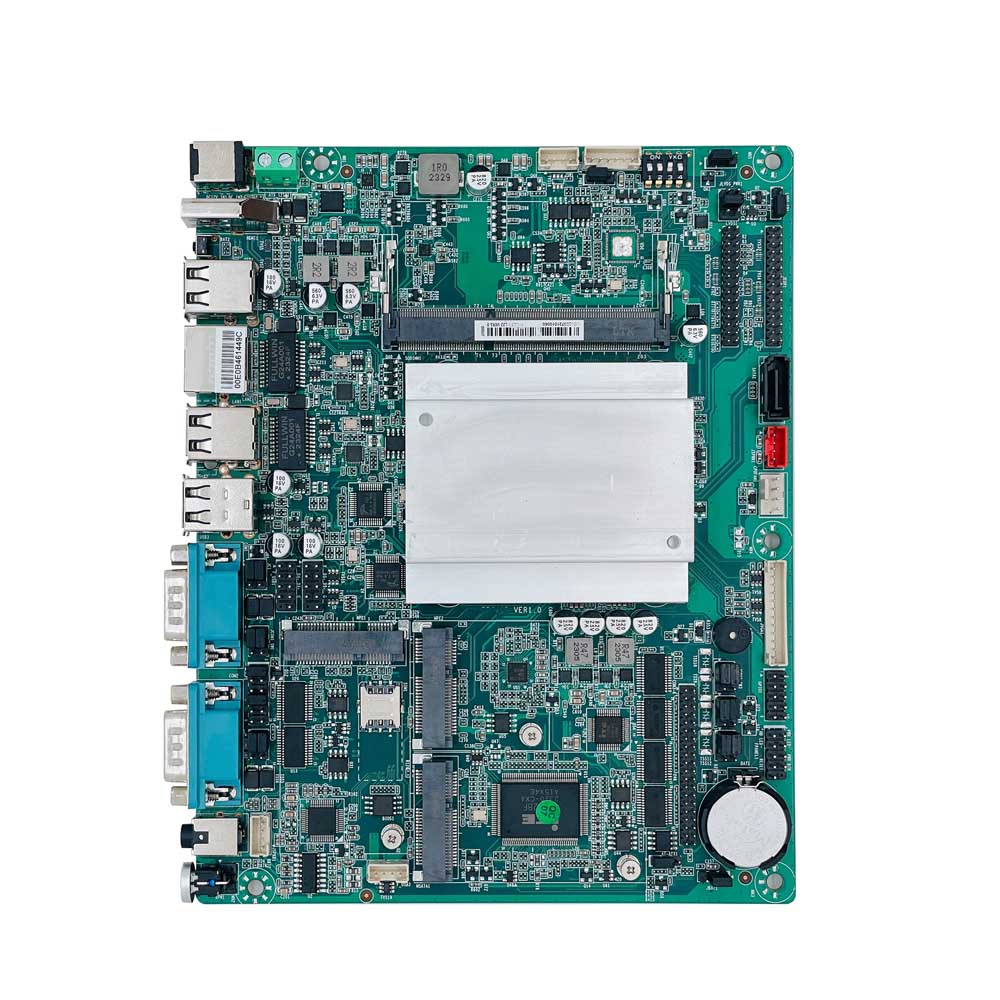
Start with the actual processing path. An Embedded SBC aimed at inference usually pairs a CPU with a neural accelerator—an NPU, a GPU block, or a vision DSP. The marketing sheet will quote TOPS numbers. Ignore those. Look instead at memory bandwidth. Tensor operations are data-hungry. If the board uses single-channel LPDDR4 at a low clock, the accelerator starves even if the TOPS figure looks respectable. A 4 GB dual-channel design will often outperform an 8 GB single-channel board on real models. Check the bus width and the memory type. Not all gigabytes are equal.
Camera input is the second filter. Many boards expose MIPI-CSI, but that tells you nothing about how many lanes are actually routed. One Embedded SBC might offer a four-lane connector suitable for a single 4K sensor. Another might split those lanes across two ports. If your system needs synchronized stereo vision, lane count and clocking matter more than the connector count. For longer cable runs in vehicles, GMSL or FPD-Link becomes necessary because MIPI signals degrade beyond a few inches. USB 3.0 cameras work for bench testing, but their latency jitters under system load. Native camera interfaces on the Embedded SBC avoid a whole class of driver nightmares.
Storage rarely gets enough thought. Vision systems log event clips or keep rolling buffers. Writing continuously to eMMC will wear out the flash inside a year. Look for an Embedded SBC with an M.2 NVMe slot. Industrial SSDs handle sustained writes and power loss better than any eMMC. Some boards offer a small eMMC for the OS and a separate NVMe drive for data—that split works well. If the board only has a microSD slot, plan for a lot of field returns.
Software readiness is where schedules go to die. An Embedded SBC might have an NPU that looks great in the datasheet, but if the vendor’s board support package only supports one inference framework and that framework doesn’t match your model, you’re stuck. Build the pipeline early. Capture a frame, run it through the accelerator, get the result back to the CPU, and display it. If that reference path doesn’t work out of the box, expect weeks of debugging. Also check the kernel configuration. Many embedded Linux builds lack preemption patches. Without them, frame timestamps jitter under load, which wrecks robot odometry and inspection gating.
Thermal behavior under sustained load is brutal to fix later. An Embedded SBC running inference pushes both CPU and accelerator toward their power limits. A board that benchmarks fine on an open bench may throttle in a sealed NEMA enclosure. Conduction cooling matters. If the accelerator sits on the bottom of the board, it needs to press against a metal plate. A thin air gap ruins the thermal path. Measure surface temperatures near the voltage regulators, not just the junction sensor. Regulators fail first in thermally stressed systems, and their failures are intermittent and maddening to debug.
Power input and brownout handling separate industrial boards from hobby fare. An Embedded SBC on a robot or vehicle sees voltage sags when motors start. If the input stage doesn’t handle transients, the board resets at the worst possible moment. Look for wide-range DC input and a specified brownout voltage. For battery-powered devices, check suspend current and wake latency. A vision system that wakes on a motion trigger but takes three seconds to boot misses the event entirely.
I/O beyond cameras often gets ignored until too late. A vision-guided robot needs CAN for motor commands, RS-485 for safety sensors, maybe isolated digital inputs for limit switches. An Embedded SBC with only consumer USB and HDMI forces you to add converter boards, which adds wiring and failure points. Latching connectors survive vibration; friction-fit USB jacks do not. The board layout also affects electromagnetic compatibility. High-speed camera traces near a motor driver stage pick up noise that corrupts inference inputs. Ask the vendor for EMC test reports before committing.
Lifecycle and supply chain stability are not glamorous, but they decide whether your product survives its first redesign. Industrial vision systems stay in production for years. The processor on your chosen Embedded SBC can be discontinued with six months’ notice. A vendor that provides a formal product change notification and a published roadmap is worth more than a few extra TOPS. Ask directly how long the board will remain available unchanged. If the answer is “we’ll see,” treat the design as a temporary bridge, not a production platform.
Hands-on testing is not optional. Data sheets don’t show you how the Embedded SBC behaves when a relay switches on the same supply rail, or how long the camera pipeline takes to recover from a hot unplug. Build a real test bench with the actual sensors, motors, and cables. Run the full application for three days straight. Cycle power repeatedly. Check the file system after abrupt shutdowns. Use a thermal camera. Most field failures come from interactions that never appeared on a bench test, but careful integration testing exposes the majority before you commit to volume production. The Embedded SBC category offers plenty of capable options; the gap between success and a costly recall lives in the details that only empirical validation reveals.